Sunday, September 14, 2014
New and delightful pod problems

Monday, September 1, 2014
Fifteen Things Not to Say to a Person with Type 1 Diabetes
1) "But you don't look sick." That's because I'm not sick.
2) "But you're not fat!" Thanks, I guess, but that has nothing to do with my diabetes.
3) "Juvenile diabetes? Don't you grow out of that?" I'm sure many parents of children with diabetes would fervently wish it to be so, along with us diabetic adults, but no, you don't outgrow diabetes. (This is why I prefer "type 1" to "juvenile" diabetes.)
4) "You STILL have diabetes?" Why wouldn't I? Is there a cure I don't know about?
5) "Big Pharma found a cure for diabetes ages ago, but they're withholding it so that they can make more money selling diabetes supplies." Let me adjust your tinfoil hat for you. People who work for Big Pharma get diabetes. The children and other loved ones of people who work for Big Pharma get diabetes. If there were a cure, don't you think they would want to use it on themselves or their children? Besides, don't you think they would make just as much, if not more money marketing a cure for diabetes?
6) "Diabetes is a self-inflicted disease." Yeah, when I was four years old I told my pancreas to stop producing insulin just for fun.
7) "You just take insulin because you were brainwashed by your doctor/by Big Pharma into thinking you need it." Those have got to be some amazing powers if another person can convince my pancreas to stop producing insulin and make my blood sugar go up and down just with the power of the mind.
8) "You got diabetes because you ate too much sugar when you were a kid." Infants who have never consumed anything other than breast milk have been diagnosed with diabetes. Where did all that sugar come from to cause their diabetes?
9) "That will go away if you lose weight." How is that you know how to cure diabetes when so much money is spent on research every year to find a cure? Let me show you pictures of me when I was a child, just before I was diagnosed with diabetes. I looked like a famine victim. "Skin and bones" doesn't even begin to describe me at the time I was diagnosed.
10) "People with diseases like diabetes are a burden on the health care system and a drain on taxpayers." What would you prefer us to do — die?
11) "I'd DIE if I had to take needles every day!" Guess what. I'll die if I DON'T take needles every day.
12) "Didn't Halle Berry wean herself off insulin? Why don't you do that?" Let's not talk about Halle Berry unless we're discussing her movies or TV show. It's probable she never had type 1 diabetes in the first place.
13) "If we take pop machines out of schools, kids won't get diabetes like you did." My school didn't have a pop machine, and I still got diabetes. Besides, kids are resourceful. Even if you prevent them from getting pop at school, they're going to find it somewhere. I personally think it's better to teach kids healthy eating habits (and for parents to model them) and alternatives to drinking pop, regardless of their likelihood of getting any type of diabetes, than it is to turn something into the "forbidden fruit," which will just make it more attractive.
14) "Can you eat that?" Unless it's poison, then yes, I can. "You shouldn't be eating that!" Unless you are my doctor, I don't think you are qualified to tell me what I should and should not be eating.
15) "Are you going to die?" Yes. Everyone is going to die someday. Will I die of diabetes? I don't know. Let's just say I am trying my best not to, and leave it at that.
Monday, August 18, 2014
Adventures in misplaced pods
Monday, April 14, 2014
Day Three of Podding
My third day of using the OmniPod didn't go so well. This is mainly due to my having trouble working out how the extended bolus works.
When I eat food that is high in fat, it keeps my blood sugar from rising for awhile. The extended bolus is meant to help with that by holding back some or all of the insulin bolus for however long the user specifies. My big problem has been in figuring out how long that is. On Saturday morning I ate a banana muffin with peanut butter, and when I took a bolus for it my blood sugar dropped right away and then increased significantly a couple of hours later.
On both Saturday and Sunday I ate a burger and fries for lunch. On Saturday I programmed my extend bolus for two hours, only to have a high blood sugar by the time the pod gave me the bolus. The next day, Sunday, I programmed it for an hour and a half, and again I had high blood sugar by the time of the bolus.
Because of the high blood sugar, I did something stupid. I had a high fat coffee drink at Starbucks but I gave myself the bolus right away -- at the same time the pod gave me the extended bolus from lunch. This resulted in my blood sugar crashing in the middle of Wal Mart -- not surprising, really. I temporarily suspended insulin delivery and ate some candy that I keep in my bag for emergencies.
The rest of day three was uneventful until a couple of hours before bedtime, when the pod suddenly emitted an alarm. Turns out that the insulin reservoir was low. I probably would have had enough to last the night, but I didn't want to risk either going into ketoacidosis overnight or being rudely awakened by another alarm. I decided to change my pod early.
I was nervous about doing everything on my own, since the first time I applied a pod I'd done it under the watchful eye of Nicola the pump trainer, but I had a handy "quick start" guide that was easy to follow. Changing the pod wasn't as difficult as I had feared.
Today I am going to try to find food that isn't as high in fat if I happen to be downtown at lunch time, but I am going to have to figure out that extended bolus eventually if I want to eat pizza ever again.
Saturday, April 12, 2014
Day 2 as a Pod Person
My first day as a pod person had its ups and downs, or at least my blood sugar did. After my blood sugar had been high all morning, the PDM finally suggested a correction bolus to bring it down.
When I was finally down to a blood sugar in the single digits I ate a chocolate bar. The PDM then suggested a bolus for the chocolate that was a bit more than I thought I needed, but I accepted the bolus. That was a mistake, as I wound up with hypoglycemia at a blood sugar of 2.4.
However, a glass of Coke and another chocolate bar brought it back to normal. I then had to figure out how to keep it up. At first I thought I would reduce my basal rate, but I soon found the "suspend" function, and I suspended all insulin delivery for the next 90 minutes, until I had supper.
I spent most of my evening working on my new house, and I noticed my blood sugar was dropping quite quickly. Time to suspend basal insulin again. Another hour and my blood sugar had increased, so I turned on the basal once more.
I slept like the proverbial log last night, completely unaware of the pod on my arm, even when I was lying on it. The biggest change I noticed was eating without doing an injection. For more than 40 years I have done an injection at breakfast time, and this morning all I had to do was push a couple of buttons on my PDM -- fewer buttons than you would push to send a text message.
Obviously I am still getting used to setting my insulin dose on the PDM. I think my peaks and crashes on day one were due to a combination of miscalculation of carbohydrates and more activity than I was anticipating, along with the learning curve on the pump. I think I'm getting there, though, and soon I will be an expert pod person.
Friday, April 11, 2014
First Day on the Pod
Sunday, March 16, 2014
Reviving the Diabeteblog: learning to carb count
Because I am getting an insulin pump I decided it was finally time to learn how to count carbs. I'd tried it once before, but I gave up before I got very far. I generally guess-timated the amount of insulin needed for the food I ate; I was pretty good at judging this for things I ate every day, but not so much for things that I ate only once in a while. I was determined to learn carb-counting once and for all, though, because I would need it for the Omnipod. I started out with breakfast: muffins from the bakery at Save-On-Foods. The package gave me all the information I needed. Each muffin contained 48 grams of carbs. I tried four units of insulin one day, six the next and eight the next. Six turned out to be just the right number.
My next food was cereal. I measured one cup of Cheerios and half a cup of blueberries. The carb count for the cereal was on the box, but I had to look up the blueberries. Since the muffins had worked out at six units for 48 grams of carbs, I decided to take one unit of NovoRapid for every eight grams of carbs. Success!
These days every time I go to a restaurant I ask for nutritional information for the food. I've started asking my boyfriend to take me to Milestones for special occasions because they have a special card that contains the carb count, calorie count, fat grams etc. for all of their dishes. I found that A & W has something similar posted on the wall of their store at the Bay Centre. Starbucks drinks and menu items can be easily found with a Google search on my smart phone, so I know exactly how much insulin I need to take for my tall cinnamon dolcé latte (four units, by the way.)
Some foods are more difficult to judge. I failed badly when I had sushi because I had no idea how many cups of rice came with my meal, nor did I know how much sugar was in the sauce that was added to the rice or how much sauce was used. I have no clue how to measure cooked pasta. I definitely still have much to learn.
I'm noticing differences already, though. I'm not having lows nearly as often because I now don't have to guess how much insulin I need to cover that sandwich or this glass of juice. Also, now that I know the carb counts of the foods I eat most often, I'm making an effort to eat more lower-carbohydrate foods.
I definitely appreciate that the bakery at Save-On Foods labels all their products with carbohydrate counts. I now know how many grams of carbs are in one-eighth of a cake, and when I want some, I will cut the cake in half, then cut it into quarters, and then slice one of the quarters in half so that I have one-eighth of a cake. Before I counted carbs I'd have had a bigger piece.
My OmniPod arrives tomorrow, and then I have to get a pump trainer to teach me how to use it. I hope to chart my progress here. Wish me luck in becoming a pod person!
Sunday, August 7, 2011
Diabetes history
There was some "diet" food available. I could drink Tab, Fresca or Bubble Up. There were a few sugarless candies available. That was until the Canadian government decided to ban saccharin. Suddenly there was no diet pop, no sugarless gum, no sugarless candy. I drank Kool-Aid prepared with Sugar Twin, which was cyclamate. There was no Equal or aspartame, no Splenda or sucralose.
I went to summer camp four times, sponsored by the Canadian Diabetes Association. There were three or four other diabetic kids my age in my hometown, and we all had the same doctor, who made an effort to get us together every so often, and we all travelled to camp together. Diabetes camp was really just like any other summer camp, with the exception that we all had diabetes and the counsellors had to carry emergency sugar supplies with them. We went swimming and boating, hiking and camping, made arts and crafts and had dances.
When I was 13, which would have been in 1981, I saw a blood glucose meter for the first time. It was about the size of a hardcover book, took a large amount of blood from your finger, and had a pointer on a dial that showed approximately what range your blood sugar was in. At that point we were still all doing urine tests, and four times a day there would be two campers assigned to do the tests for each group. Take two drops of urine, add ten drops of water, drop in a Clinitest tablet and watch the chemical reaction take place.
By my third time at camp, when I was 15, we were all using blood glucose meters -- Glucoscan or Glucometer. These were sophisticated machines for their time! They were now about the size of a paperback book instead of a hardcover. The lancing device was a nasty little thing called an Autolet. (See a picture of it here.) The drop of blood was still pretty big, and you had to wait 60 seconds (the machine would sound a buzzer) and rinse off the strip with a special bottle of water before putting it in the machine. It then gave you a digital readout. This was a big improvement over urine tests. Aspartame became available around this time too, and we now had sugar-free pop again, including Diet Coke. For the first few years, though, products made with aspartame were more expensive than their sugar-containing counterparts.

When I was in my teens I had to spend some time in the hospital. I got my tonsils out, was admitted for nausea and vomiting because I couldn't keep my blood sugar under control when I couldn't eat, and had dental surgery. Each time I was admitted, I wound up teaching the nursing staff how to use the blood glucose monitor and how to mix two types of insulin in one syringe so that I didn't have to take extra needles.
By the time I was in university I was taking two shots a day -- still Lente and Toronto -- and the blood glucose monitor was now the Glucoscan II (image) and no longer required rinsing. Now it used a slightly smaller drop of blood. It still required a countdown, but now you had to blot the blood on a special pad before inserting into the machine. It was still about as big as a paperback book.

When I finished university in the early 1990s my insulin changed from beef-pork insulin to synthetic "human" insulin, or Humulin. I now took Humulin R and Humulin L, and a newer blood test machine that now read in mmol/l instead of mg/dl and required neither rinsing nor blotting of the strips. (Sadly, I can't remember the name.) Unfortunately, it was around this time that I became unemployed and had to go on welfare. Due to a poorly informed case worker and my being so shy and timid that I didn't dare speak up for myself or contest what I was told, I was left with the impression that my diabetes supplies would not be paid for by the welfare program, and I wound up reusing my syringes, taking as little insulin as I could get away with, and never testing my blood sugar. To make things worse, the company making my blood glucose meter discontinued it, and the strips were soon impossible to find.
Fortunately, in the mid-90s I discovered the diabetes clinic at the Royal Jubilee Hospital, and I also got a better caseworker for the welfare benefits. The diabetes clinic supplied me with my first One Touch blood glucose meter (image), and the caseworker got my medical supplies paid for.

One day around 1995 or so, I went to the pharmacy to pick up my prescriptions as usual, and the pharmacist asked me if I would like to try an insulin pen made by the Novolin company. I was intrigued by this new device. Sadly, there wasn't one for Lente insulin, but I started using it for my Toronto insulin. In 1997 I went on disability, which guaranteed that my medical benefits would stay in place.
It was in 1999 that I changed insulin for the first time since 1973. I switched from Lente to NPH insulin. Now I could use an insulin pen for that insulin too. A few years after that, in the early 21st century, I changed from using Toronto (Regular) insulin to NovoRapid. A few years after that, I went on Lantus insulin. My cat was also diagnosed with diabetes, of the feline variety, and now we both take Lantus -- me once a day, and my cat twice a day. I also went through a few more glucose meters, all from Lifescan -- the Fast Take, the Ultra and the Ultra Smart.


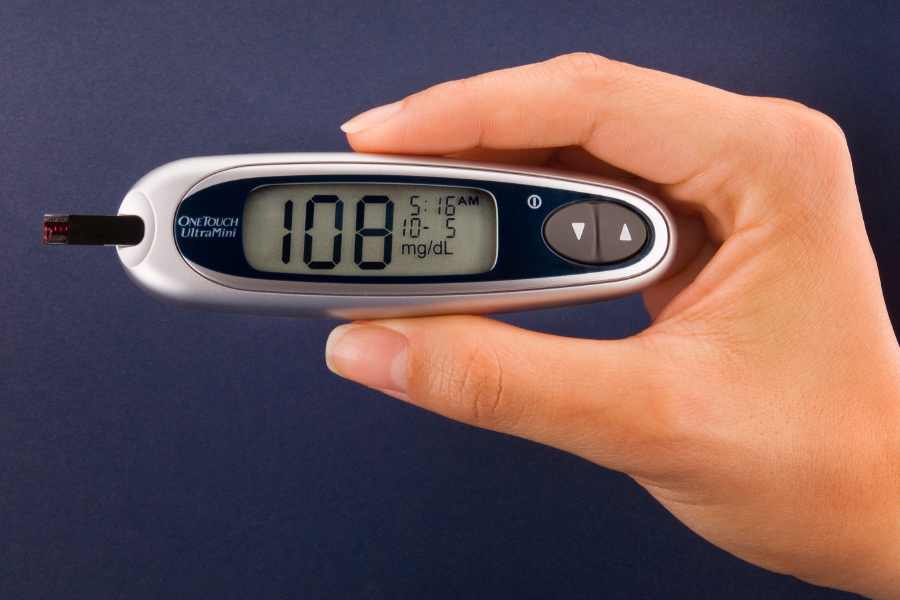
Today I am no longer on welfare or disability. I have a job now. I still use insulin pens, and now I use a One Touch Ultra Smart for my glucose meter, alternating with an Ultra Mini that I carry in my purse for convenience. I've tried almost every diabetes gadget under the sun except for the insulin pump and the continuous glucose monitor, both of which are out of my price range and neither of which is covered by public medical insurance and the medical benefits I get from my job only go up to $500 a year.
Monday, November 29, 2010
The problem of blame
None of this applies to people with Type 1 diabetes, of course, though we get lumped into this all the time. But it doesn't always apply to people with Type 2 diabetes, either. Not everyone with a diagnosis of Type 2 got it from being fat or lazy. For many people it was just the luck of the genetic draw. If your grandparent and/or parent had Type 2 diabetes, there's a good chance you'll get it eventually ,too, regardless of your weight or physical fitness level. There are also people who get Type 2 diabetes as a side effect of having another medical condition, such as polycystic ovarian syndrome, or whose weight gain was caused by a particular medication they were on. Many antidepressants and other psychiatric medications have weight gain as a side effect.
Even if a person did get Type 2 diabetes because of their weight, it's not helpful or supportive to keep blaming the person. I'm sure they didn't wake up one day and say, "Hey, I think I'm going to be fat now. I love being ridiculed by the general public and blamed for everything that's wrong with the health care system and demonized by the media." Telling a person that he or she got diabetes from being overweight isn't going to make their weight magically drop overnight, nor will telling them that their diabetes will go away if they lose it. (It won't, by the way. The person may be asymptomatic, but the diabetes will always be there, regardless of what Drew Carey or the latest celebrity with diabetes says.)
I mentioned the media. They're the ones who are largely to blame for this. Some 99 percent of the news stories about diabetes mention weight. I follow lots of diabetes "news" sources on Twitter and almost all of them are full of articles about diabetes and weight. The media just eats up stories about fat people, for some reason. Obesity + diabetes makes a good sound byte, I guess. News stories are limited for time (TV and radio) and space (newspapers and websites) so they can't go in to the very complex causes of diabetes. I doubt many of them have ever heard the term "autoimmune disease" or even know that there is more than one type of diabetes, let alone several types.
While diabetes seems to be the favourite target of the blame game, some other diseases get it too. Lung cancer is another popular target. I remember when some minor celebrity died of lung cancer. I mentioned on an online discussion forum that this person was not a smoker, so therefore we can't blame all cases of lung cancer on cigarettes. Well, I was immediately pounced on by people who told me that obviously, shne must have smoked at SOME point in her life; either that, or she had lived with smokers long enough to be exposed to enough secondhand smoke to develop lung cancer.
Why do people like to play the blame game? Well, I think for many it comes down to fear. If I'm afraid I'll get a particular disease, I can look around and say, "Well, I don't smoke," or "I'm not overweight," or "I don't eat junk food," or "I exercise regularly," therefore I won't get that disease, unlike the people who do smoke or who are overweight or who eat junk food or who don't exercise. It's probably reassuring in a way.
Then again, some people just like to make themselves look better than other people. I have encountered some people with Type 1 diabetes who consider themselves superior to those with Type 2 because we didn't get our disease from being fat.
I think in the end we all want the same thing: a cure for all types of diabetes. Unfortunately, the "blame game" stands in the way of that by making the general public think that if people just lost weight, their diabetes would be "cured" and that getting diabetes is our own fault, and if we just lived healthier lives we wouldn't get sick in the first place. So why donate money to research a disease that can be "cured" so easily?
Sunday, November 14, 2010
World Diabetes Day & Me
Sundays are usually pretty quiet days for me. I seldom go out. So I didn't even have a chance to wear blue today.
I tried to take part in the "Big Blue Test" but I didn't manage even that. For the Big Blue Test you were supposed to test your blood sugar at 2 p.m. your time, then do 15 minutes of exercise and test again. I tested at about 1:55 and found that my blood sugar was 3.7. That's too low for exercise, so I didn't do any.
Some people were doing a diabetes scavenger hunt, with the idea being that you organize a team, take pictures of specific items and then post them to a certain web page. But I found out about this only the night before, which was too late to organize a team, even if I knew enough fellow people with diabetes to do so. The only diabetic people I know are the ones on Twitter. My boyfriend didn't want to go out today.
Next year I'm going to try to get a jump on World Diabetes Day. I don't know how yet, but I'm going to do some research to find out if there is a way to organize people to do something to mark the day and get something lit up in blue. Unfortunately it's a work day next year, being on a Monday, so that will limit my options.
Thursday, January 14, 2010
Don't forget to eat!
Apparently I do.
This morning I got out of bed around 9:00 a.m. and sat down at the computer. I started eating an orange, and I figured I'd better take my insulin to cover the orange as well as the bowl of oatmeal I planned to eat after I'd finished eating the orange. So I calculated my dose, and I did the injection.
Now, it just so happens that there are these games I like to play on the internet. They're on Facebook. They're called Farmtown and Farmville. They are highly addictive little games. I play both of them first thing every morning, and can easily spend an hour between the two of them. This is what I was doing while I was eating my orange and injecting my insulin. This could have had something to do with what happened.
About an hour and a half to two hours after I injected the insulin, I noticed that I was feeling a little bit lightheaded. At first I shook it off; I figured I was just expecting to have low blood sugar because I'd had it the day before between breakfast and lunch, but today I'd lowered the dose of insulin to make sure that didn't happen again.
But I still felt lightheaded and a little dizzy. I was just about to go find my blood glucose monitor when something occurred to me.
What happened to that bowl of oatmeal I bolused for?
I looked in the sink. No dirty bowl in the sink.
I thought back. Did I remember boiling the water? Did I remember mixing the oatmeal in the the bowl?
I did not.
Yes, somehow I managed to forget to eat my breakfast. When the little blotches of light started appearing in front of my eyes, I grabbed a can of Coke and gulped it down.
Then I prepared and ate my overdue bowl of oatmeal.
Sorry, Mum. Guess you had good advice for me after all!
Su
Tuesday, December 22, 2009
Diabetes and income
Part of the problem, I think, is that different provinces choose what drugs and supplies to cover on their prescription drug plans. Some provinces don't even cover insulin; others don't cover test strips. Some don't cover syringes and needles. When I was forced to go on welfare, I had one social worker tell me that "We're afraid you'll sell them to drug addicts, so we won't pay for your needles. You'll have to pay for them out of your own pocket." (I later found out that this was not the case, but at the time I figured that someone who worked for the government knew what she was talking about.) Diabetic people can drop off used needles at the needle exchange, but cannot pick up clean needles the way drug addicts can.
I thought that living in B.C. sucked, but I have to admit that Pharmacare does cover almost all diabetes supplies. They don't cover insulin pumps, and they don't cover Levemir insulin, but they do cover Lantus. They don't cover 100 percent of the cost of NovoRapid or Humalog, unfortunately, and I had a big problem when I was on disability and trying, out of my very limited income, to cover the portion of NovoRapid that the government doesn't pay for.
I think that another part of the problem is stigma. Diabetes has a very big stigma in our society. People with diabetes are considered to be fat and lazy. "Just lose weight, and your diabetes will go away." People don't want to admit to having diabetes, so they don't. They don't test their blood sugar, they don't take their medication, and they don't follow a proper diet. They probably don't talk to or listen to their doctors, either. Some people who are diagnosed later in life are just set in their ways and don't want to change.
I think this stigma is also part of the reason that governments don't want to pay for diabetes supplies. Who needs expensive insulin, test strips, oral medications or needles when all you have to do is exercise more, eat a healthier diet, and lose weight to get rid of your disease? Anytime I've heard provincial politicians talk about diabetes, they've all mentioned obesity, inactivity and unhealthy lifestyles. They refuse to acknowledge that not everyone who has diabetes, whether it's type 1 or type 2, has it because of weight or lifestyle. It's easier to blame everything on the diabetic person themselves.
It has also been noted that poor people usually live "unhealthy" lifestyles. When you're getting most or all of your food from a food bank, you aren't getting fresh fruits and vegetables. They're perishable. The food bank stocks non-perishable food. You're likely to be getting cereals, pasta, rice, Kraft Dinner and canned soups with a lot of chemical preservatives in them. The vegetables you get are probably canned and probably also contain lots of preservatives. So people who use food banks are getting a lot of starchy, high-carbohydrate food. But as the old saying goes, beggars can't be choosers.
People on income assistance in British Columbia can get an extra $15 a month for special dietary requirements if they have diabetes. This is just a drop in the proverbial bucket. It's not going to get you much, if any, extra food, especially if all of your money is going to keep the rent paid and the hydro turned on. Also, you have to re-establish your eligibility for this extra money every few months, in case you "get better" and your diabetes suddenly goes away. I told the case worker at the disability office that my diabetes is not going to suddenly go away after 35 years; she said, "But it could improve." Not that much, lady.
So what can be done about this problem? Well, the first thing, I think, is for governments to get their collective heads out of their collective asses and make sure that all people with diabetes have access to the prescription drugs and supplies that they need. All essential diabetes supplies need to be covered by provincial prescription drug plans.
Governments also need to stop blaming people for causing their own diabetes. The media could play a part in this too, by not conjoining "diabetes" and "obesity" (or even worse, using the word "diabesity") in every newspaper and magazine article and television news broadcast.
When a person is diagnosed with diabetes, he or she needs to be educated about how serious diabetes can be and why it is essential that it not be ignored. I don't advocate scare tactics, but people need to be aware of what the consequences of improper diabetes care can be. However, doctors need to stop making it sound like insulin is some sort of punishment for "bad" diabetics; I've heard from many people with Type 2 who think that having to go on insulin is some sort of failure, and they resist taking it.
I think that gyms and recreation centres should be more accessible to people with low incomes. It can be very difficult for people to exercise outdoors in winter in many parts of this country, unless they have the financial means to do things such as skiing. Being able to go to a rec centre and use a swimming pool or a skating rink or an exercise room would be beneficial not only for people with diabetes, but for lots of other low-income people as well. Regular exercise can help prevent Type 2 diabetes, and it has many other physical and mental health benefits as well.
To sum up, it is not surprising that people with low incomes are more likely to fall prey to diabetes complications. People need to rethink their views of diabetes to help combat this inequality.
Tuesday, November 24, 2009
Getting the munchies
Unfortunately, my snacking choices tend to be really high-calorie, high-carbohydrate foods such as muffins, chocolate bars or potato chips. None of those is a very good choice when I'm spending my day sitting in front of a computer, moving only to go the washroom or to grab a cup of coffee from the kitchen.
Last weekend when I was shopping I decided to look for better snack options. I found some mini rice cakes that came in flavours like chocolate, caramel, cinnamon and peanut butter. The cakes are packed into little pouches, and each pouch has about 15 grams of carbohydrate. "Oh, those look good," I thought, "and they're not super-high in carbohydrates."
So what happened? I bought a box, I took the box to work with me, and I ended up downing three pouches of rice cakes in about ten minutes, requiring an insulin bolus. It's one thing to eat a snack that has 15 grams of carbs; it's another to eat a snack that has 45 grams of carbs.
I'm not exactly a low-carber, but I try to be sensible about what I eat. And eating three bags of rice cakes is probably not terribly sensible of me.
Monday, November 9, 2009
The problem of cheating
I objected to the wording, and it was revised to "Did you give in to temptation?" A better choice of words, perhaps, but it got me thinking about the concept of "cheating."
I've often heard both diabetic and non-diabetic people refer to "cheating on my diet." This means eating something that is apparently forbidden; you can't have food that you might actually LIKE to eat. That would be cheating. You're supposed to give up sweets. No chocolate. No candy. No ice cream. No cake, cookies or pie. No juice or regular (non-diet) pop. Some people give up bread, pasta and potatoes.
Now, I'm not going to deny that all of those foods are pretty darn high in carbohydrates and/or sugar or that they can be pretty tough on diabetes control.
My problem is in making any food seem "forbidden" so that if you eat it, you are "cheating." Cheating makes you feel guilty. Cheating is a bad thing. It's something you do in secret. You don't talk about it.
Other people make you feel bad about it, too. My ex-girlfriend used to go online and post to various discussion forums about how I was a bad diabetic because I dared to eat an ice cream cone. Other people point and laugh at the person who orders a burger and fries and a Diet Coke "as if the Diet Coke is going to cancel out all the calories in the burger and fries" without knowing that maybe the person who ordered that food is not counting calories, but carbohydrates.
I don't think there is anything wrong with eating that Halloween-size chocolate bar, or having a piece of cake at your friend's birthday party, or a piece of pumpkin pie at Thanksgiving dinner, or an ice cream cone on a hot day, as long as you know how to calculate enough insulin or exercise to cover for it. I remember one summer afternoon when I had an ice cream cone at the recently opened Ben & Jerry's stand at the mall; I fully intended to give myself some insulin to cover for it, but I was waiting for the effects of the fat in the ice cream to wear off first, because the fat delays the carbohydrates making your blood sugar rise. Well, I did so much walking that afternoon that my blood sugar never did rise, so I didn't need to take that extra insulin after all.
Calling something "cheating" gives it a stigma. It makes us ashamed of eating that chocolate, pie, ice cream, whatever. It makes us hide what we're doing instead of asking for help: how do I calculate the carbs in this piece of birthday cake? How long after eating this ice cream should I take this insulin bolus? I think maybe I'm eating too much pie, cake, ice cream, chocolate -- what should I do?
As I've said before in this blog, I don't advocate eating piles of cake, cookies, candy, chocolate, etc. I believe in moderation. What I don't believe in is self-denial. Denial and deprivation can lead to binging. I found this blog that talks about the "deprivation binge." Quote: "when certain foods are restricted because they are ‘bad’ or ‘forbidden’, tension builds up and a breaking point is eventually reached with a binge."
I think that is one of the biggest reasons to get rid of that "cheating" stigma. Binge eating is bad for everyone, but it can be especially bad for a person who has diabetes.
Saturday, October 31, 2009
Trick-or-Treat with diabetes
What does that mean if Junior has diabetes?
These days most diabetics and parents of diabetics know about carb-counting and carbohydrate-to-insulin ratios. They can calculate how much candy is "safe" to eat and how much insulin to take to compensate for it. This was not the case when I was a young diabetic. Remember, this was the 1970s.
When I was a kid, sugar and candy were big no-nos for diabetics. Diabetic-friendly candy was not nearly as popular as it is today, and even if it had been, none of the people whose houses I went to would have known about my diabetes. We were still on what was called the "food exchange" system (where a slice of bread equalled "one bread exchange") and candy and chocolate didn't fit into that system.
However, I still dressed up in costume, and I still went Trick-or-Treating. I collected my fair share of candy. But I couldn't eat it. My mother would go through my goodie bag and take out the raisins and apples that I could eat, but the rest was stored away in a cupboard.
I did have an older brother and sister. And while I was young enough to go Trick-or-Treating, they -- older than I by seven years and five years -- were not, once I hit about eight years old. This did not, of course, stop them wanting candy.
My parents and I hit on an idea. It was still my candy, even if I couldn't eat it. So I sold it. My brother and sister would give me a quarter for each fun-size chocolate bar or other goodie they wanted, and I used the money to buy myself some sugar-free candy, or even a non-food treat such as a comic book.
Not only did this solve the problem of how to accomodate my diabetes, but it probably also made my dentist happy!
Tuesday, June 16, 2009
Canadian health care, part 2
When I'm sick, I go to the doctor. I don't have to ask my HMO if my particular doctor is "approved" by them. I don't have to ask if a particular doctor accepts the kind of insurance I have, because everyone in the province has the same insurance. I either call up my doctor's office and ask to make an appointment, or I go to the nearest walk-in clinic. I tend to use walk-in clinics a lot, actually, because I hate making telephone calls. Regardless, I go to the doctor when I'm sick. I don't sit around worrying about whether I can afford to go to the doctor; I just go. I don't have to pay anything. There is no deductible. There is no co-pay. No bill will show up in the mail.
Three times a year, I go to see my endocrinologist. I get a referral from my GP to go see my endocrinologist; specialists appointments are by referral. You can't just walk in to see a specialist. Specialists don't get paid if there is no referral. But I don't have to pay anything, not even for a specialist. I don't have to ask anyone's approval; I don't have to submit any kind of request to an insurance provider asking if they will "approve" my seeing this doctor. And no, the government doesn't "decide for me" if I can go see the endocrinologist.
My endocrinologist wants particular tests run. They include a hemoglobin A1C and a urinalysis. About a week before my appointment with the endocrinologist, I go to the lab, I give them my medical card, and they run the tests. My endocrinologist will have sent them a request for the tests. Again, I don't pay anything. I don't have to search to find out whether the lab closest to where I live accepts my particular brand of insurance, because as I said, everyone has the same insurance.
It's kind of like everyone in the province has the same HMO, except that for us, the HMO is the government. That's why it's called a "single payer" health system; everyone's health costs are paid for by the same provider, but for us, that provider is the government rather than a private medical insurance company.
Say I was in an accident, or my diabetes care got screwed up somehow and I ended up in DKA (diabetic ketoacidosis), and I had to go to the hospital. No one is going to make me fill out a whole bunch of forms if it's an emergency. No one is going to ask me how I'll be paying for my care. Eventually someone might ask for my MSP (medical services plan) card so that the hospital can bill the government for my care, but that won't be the priority.
Last year I went off disability benefits while I was going to school, and because I'd had a large windfall of money from an income tax refund, I lost my "medical only" income assistance (see yesterday's blog entry for an explanation of medical-only income assistance) and had to pay my own medical premiums. This wasn't a hardship, because I did have enough money. I was just unused to having to pay premiums, having been on either disability benefits or "medical only" assistance for the last ten years. I hadn't had to pay premiums in those ten years. So I forgot about it for awhile, and then I got a letter in the mail reminding me that I hadn't yet paid my premiums.
I had an endocrinologist appointment coming up, and I knew that my payment wouldn't be processed in time for that appointment, so I phoned up the medical services plan call centre and asked if I would still be able to go to that appointment and whether I'd have to pay for the lab tests I'd just had. "Oh, no, that's not a problem," I was assured. "Even if you don't pay your premiums, you still get health care. It's a necessity! We're not going to make you go without."
Monday, June 15, 2009
The Canadian health care system
First of all, to be perfectly accurate, there is no "Canadian health care system." There are multiple systems -- one for each province and territory. I live in British Columbia, so I can really only talk about what the system is like here, though there are more similarities than there are differences between the different provincial system.
British Columbia is one of only a few provinces that charge health care premiums. These premiums are based on your yearly income. People with an income of less than $20,000 pay no premiums. The maximum premium, for people with an income of $28,000 a year or more, is $54 a month. Between those two amounts are various income levels with various levels of subsidy.
These premiums cover almost everything: doctor visits, hospitalization, lab tests, X-rays, etc. They do not cover prescription drugs. They do not cover psychotherapy. People with the highest premiums, the ones with an income over $28,000, do not get certain services covered, including physiotherapy, chiropractors or massage therapy. People who have lower premiums have these services covered, but do have to pay small "user fee" of about $10 to $15 per visit. People with higher incomes usually have these services paid for by their employers through various benefits packages.
Many of my American friends are surprised to find out that Canadian employers offer medical benefits, since the government does cover most of our health services. Benefits packages usually cover things that the government doesn't cover, like the aforementioned physio, chiropractors, and massage therapy, and prescription drugs. Some cover psychotherapy or offer "employee assistance" packages. Some pay the medical premiums for their employees.
For those who do not have employers who pay for their prescription drugs, we have what is called Pharmacare. Pharmacare is another sliding-scale plan that is based on a person's income. People whose income is less than $15,000 pay no deductible, but must pay 30 percent of their drug costs until they reach a maximum of 2 percent of their annual income spent on prescription drug costs. People whose net income is between $15,000 and $20,000 pay a deductible equivalent to 2 percent of their annual income, and then the government pays 70 percent of drug costs, until the person has spent 3 percent of their annual income on prescription drugs, at which time the government pays 100 percent of the drug costs. And people whose annual income is over $30,000 pay a deductible equivalent to 3 percent of their income, and then the second deductible is equivalent to 4 percent of annual income.
People who are on welfare or disability benefits have all their prescription drug costs covered by the government, and they don't have to pay medical premiums.
Because I am currently on disability, all of my diabetes supplies (and my other prescriptions) are covered by the government. If I go back to work, they will still be covered by the government under a program called "medical-only income assistance." This is a program that pays the costs of medication for people who have left disability assistance to go to work, but who would have trouble paying for their prescription drug costs if those costs were no longer covered by the government. The government sees this as a way to encourage people with disabilities to go to work and get off disability assistance.
What do I think of the British Columbia health care system? (As I said, there is no universal "Canadian" system.) I think it's not perfect, but I prefer it to the lack of a system in the United States. It has its flaws, certainly; the government has a tendency, in my opinion, to see health care as nothing but a big expense, and they tend to stigmatize certain diseases -- especially diabetes -- as being a "drain" on the health care system.
But I know too many Americans who have no health insurance. I know too many who are terrified of losing their jobs because if they do, they lose their health insurance. I have met people who say things like, "I think I'm having a miscarriage, but I can't go to the hospital because I have no money," or "I have diabetes, and I can't afford to pay for my insulin/syringes/test strips/etc."
There must be a better way.
Tuesday, June 2, 2009
Diabetes and hot weather
One concern is dehydration. Dehydration is a concern for everyone, of course, but people who have diabetes have to be even more concerned. High blood sugar can cause dehydration, and some diabetes complications, such as certain forms of neuropathy, can impair the body's ability to sense dehydration symptoms. So I have to make sure I drink plenty of fluids on hot days.
I've discovered that the symptoms of low blood sugar seem to be pretty similar to the symptoms of heat exhaustion -- sleepiness, lightheadedness, confusion, etc. This causes me to check my blood sugar a lot more often when the weather is hot. Unfortunately, this means I use a lot more test strips than usual! Unfortunately, heat exhaustion is harder to treat than low blood sugar is. I'd rather have low blood sugar.
Heat also seems to lower blood sugar fairly quickly. I've noticed that I have to lower my insulin dosage on days when the temperature is abnormally high. There have been hot days when it seems like no matter what I eat, my blood sugar refuses to go above 4 mmol/l. While it's kind of nice to be able to eat anything I want, it's rather frustrating to have to be constantly treating myself for low blood sugar. I'm also sure it's not good for my weight to spend the day eating anything I want.
Then again, on hot days my appetite is diminished, so then I don't want to eat a lot. This means lowering my insulin dosage even more! Unless, of course, I decide to get a double-chocolate-chip frappucino from Starbucks. It's a lovely, chocolatey, cool drink, and Starbucks has lovely air conditioning, but it's going to wreak havoc on my blood sugar if I'm not careful and don't bolus appropriately for it.
And I'm probably not going to feel like exercising off the carbohydrates in that frappucino if the weather is hot. Exercise plus hot weather can equal dehydration and heat exhaustion, which brings us back to where I started this post.
So I will enjoy this hot weather while it lasts, but I'll also have to keep an eye on my diabetes while I do so.
Wednesday, May 20, 2009
Feline diabetes
She had the usual signs: drinking a lot (three bowls of water a day), peeing a lot, being sleepy all the time. So the vet told me to start giving her injections of Lantus. I was surprised, but relieved, that I didn't have to give her a particular cat-specific type of insulin. I don't have a job right now, and the government program that pays for part of the cost of my prescription drugs wouldn't pay for medication for a cat.
I can give Poupée my own Lantus. I can even use my own insulin pen. I'm actually much more comfortable with pens these days than I am with syringes. I tried using a syringe on Poupée, and she squirmed away from me. So the next day I used my pen, and she seemed to be more comfortable with that. So as long as she's taking an even number of units of Lantus, I can use my pen. (The pen only goes in increments of two.)
Diabetic kitties should have their blood sugar tested, but so far I have failed at this. You're supposed to use your lancing device (the one you would use to poke your fingers as a human diabetic) to poke the kitty's ear. Well, I've tried, and Poupée has been amazingly tolerant of my efforts to get blood from her ear, but so far I haven't succeeded. I'd really like to know what her blood sugar is like and how her insulin is affecting her. At least she's not drinking nearly as much water as she was before she went on insulin.
Poupée also has to go on a low-carb diet, which means all the cats in my household have to go on a low-carb diet. She's eating Purina diet cat food. The vet calls it the "catkins" diet.
I think for many people it's a big deal when their cat is diagnosed with diabetes. Maybe because I've had diabetes for almost my entire life, it's not such a big deal for me. Granted, it cost me a lot of money to get her diagnosis in the first place, but at least I can share my own diabetes supplies with Poupée so they won't cost me any extra. Sure, I would prefer it if my kitty didn't have diabetes, just like I'd prefer not to have diabetes myself. But at least it can be treated, for both of us.
Monday, May 11, 2009
Explaining diabetes to non-diabetics
How do I explain what hypoglycemia feels like? I could say that it's unpleasantly like being drunk, but I remember Arthur Dent in the Hitchhiker's Guide to the Galaxy asking, "What's unpleasant about being drunk?" (Ford Prefect's reply is, "Ask a glass of water.")
How do I explain what hyperglycemia feels like? "You're thirsty all the time. You keep having to pee. You're tired and grouchy." All of these are true, but they barely begin to cover it.
Then, of course, there are the misconceptions. "You can't eat sugar." Wrong. Sugar is not the big bad that people make it out to be. Carbohydrates are the real culprit. And they don't have to be eliminated entirely, just taken in moderation. But I still have people trying to hide the candy dish when I'm around or telling me, "You can't eat that!"
Of course, people laugh at me when I order a burger, fries and a Diet Coke. "Oh right, like the Diet Coke is going to cancel out the calories from the burger and fries!" Actually, I'm not concerned about calories. I'm concerned about carbohydrates. I'm drinking a Diet Coke because I don't want to add a couple of dozen more grams of carbohydrate to my meal. If I explain that I have diabetes, then I'll have the same people saying, "But a diabetic shouldn't be eating that!" Argh!